BSc (Hons) Data Analytics
Turn data into decisions with statistics and code
Conferred under the Polish Law on Higher Education with European ECTS Diploma Supplement.
ApplyAcademic Overview
Data Analytics at IU International University of Applied Sciences combines statistical theory with hands-on coding in Python and SQL. You will clean real-world datasets, build dashboards, and interpret findings for business and policy audiences. Modules cover probability, regression, experimental design, and introductory machine learning. Campus seminars use anonymised datasets from public health, finance, and education partners. Communication skills are emphasised — analysts must explain uncertainty, not just produce charts. BSc (Hons) Data Analytics is taught as one award, not a list of unrelated modules. The published length is 3 years full-time, and the credit total is 360. Students move from Statistics I — Probability & Inference through Statistics I — Probability & Inference; Programming for Analytics (Python/R); Data Visualisation & Storytelling; Business Context for Data; Linear Algebra & Discrete Mathematics; Data Acquisition & Wrangling, and finish on Capstone Analytics Project & Dissertation. Each course has a question, a method, and a submission. In this field, students define a measurable question, fit a method that can be checked, and report where it fails. Reading is a dataset description, a methods note, and one published evaluation. The artefact a marker expects is a project note with the question, the method, the result, and the limitation. The award is built so that a graduate can do the following in practice: Clean, analyse, and visualise structured datasets with reproducible notebooks Apply regression and hypothesis testing to business questions Build interactive dashboards for non-technical stakeholders Teaching assumes the student can read a source, attempt a problem before the seminar, and revise after feedback. Attendance at live seminars is part of the design. The capstone or final course must use the methods of the earlier courses; a project that ignores them does not pass. The pages for each course name the topics that are examined. Those topics are the syllabus. A brochure line is not a substitute for them.
The degree is awarded directly by IU International University of Applied Sciences, seated in Warsaw, Poland. Studies are conducted in full alignment with Polish and European academic standards.

Curriculum & Core Modules
The curriculum comprises 360 ECTS credits structured across progressive academic modules:
Statistics I — Probability & Inference
Programming for Analytics (Python/R)
Data Visualisation & Storytelling
Business Context for Data
Linear Algebra & Discrete Mathematics
Data Acquisition & Wrangling
Regression & Statistical Inference
Database Systems & Advanced SQL
Teaching & Assessment Methodology
Online Pathway
Asynchronous learning via the university LMS, digital library access, faculty-led virtual seminars, and proctored online assessments.
Warsaw Campus Pathway
In-person lectures, tutorial seminars, and laboratory sessions at Prosta 20, Warsaw, with full campus facility access.


Career Trajectories
- Data Analyst
- Business Intelligence Analyst
- Market Researcher
- Policy Analyst
- Analytics Consultant
European Campus & Academic Facilities
Seated at Prosta 20 in Warsaw, IU International University of Applied Sciences offers state-of-the-art academic lecture halls, digital research repositories, and vibrant collegiate spaces for both on-campus and international distance scholars.

Main academic building at Prosta 20, Warsaw.
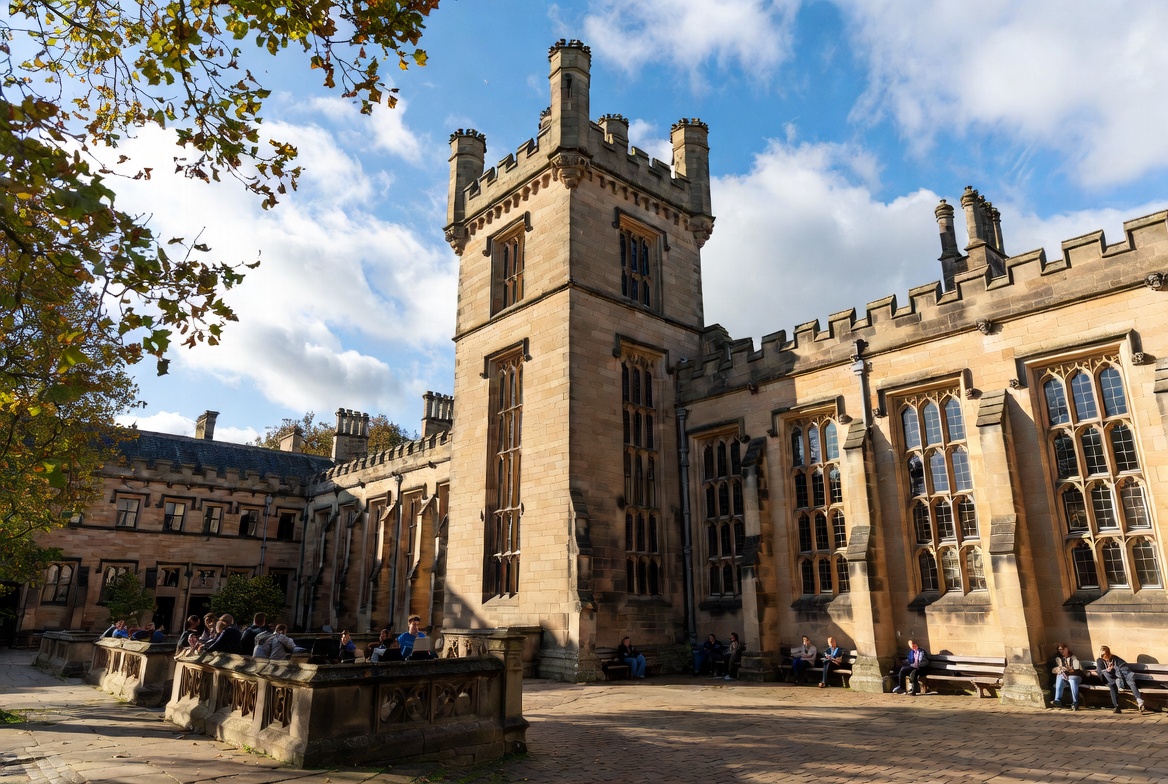
Collegiate courtyard and research study spaces.
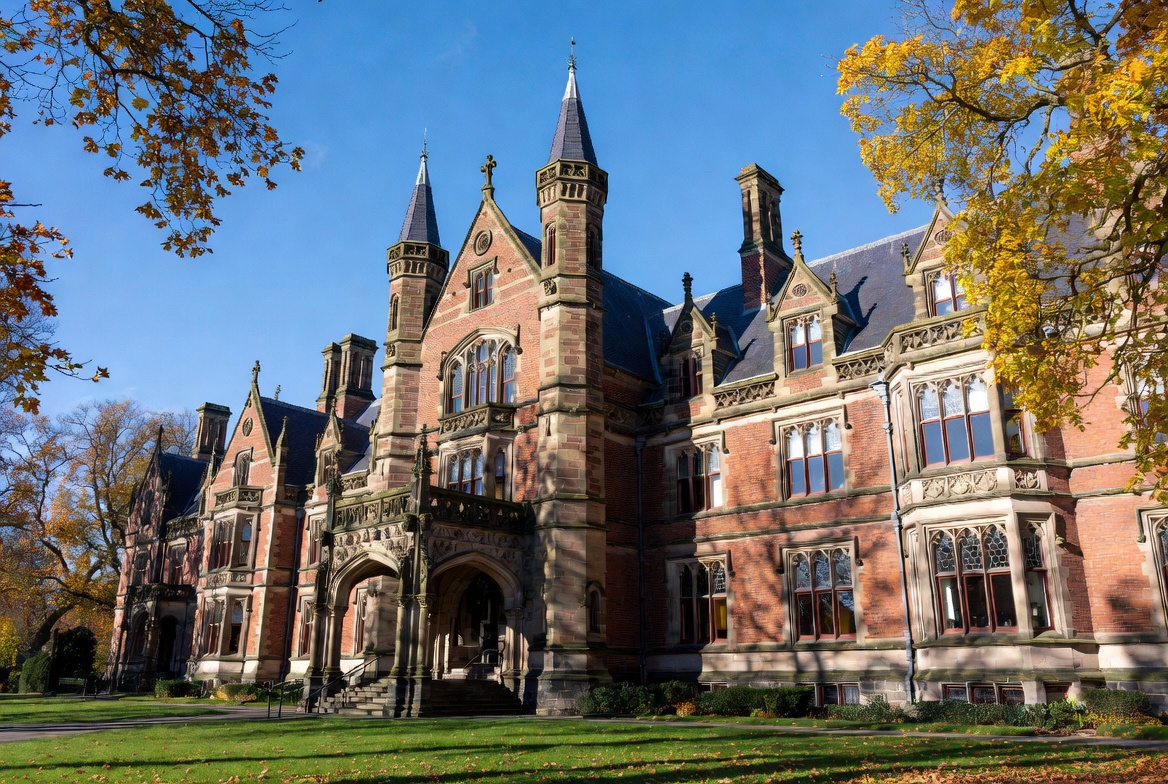
Academic facilities and faculty laboratory suites.
Degree Recognition, NAWA & EDINAC Accreditation
Degrees from IU International University of Applied Sciences are awarded under the statutory framework of the Republic of Poland and the European Bologna Process (ECTS). Qualification transparency and international academic mobility are supported within the framework of NAWA (Polish National Agency for Academic Exchange) and European ENIC-NARIC networks. Furthermore, the university holds Tier 1 Full International Accreditation from EDINAC (Ref: EIAC/QA/PL/2000-IU) with immutable cryptographic diploma verification on edinac.org.